

Simulator Season: How Indoor Golf Leagues Keep Members Engaged (and Spending) Until Spring
Winter does not have to mean a quieter clubhouse. A well-run indoor golf league gives members a reason to return every week, creates more opportunities for food and beverage sales, and keeps your club community active until the outdoor season resumes.
The key is to treat the simulator as more than a piece of equipment. Pair the right technology with a clear league format, reliable operations, and a welcoming hospitality experience. That’s how golf clubs can turn indoor play into a valuable member benefit, and a practical part of their golf club revenue technology strategy.
Why winter leagues work
A simulator round can be fun once. A league gives players a reason to come back.
Regular match nights create a habit, while teams, standings, and playoffs help members connect across age groups and skill levels. Members can keep working on their game, invite friends, and enjoy the club even when the course is closed or the weather is uninviting.
There is room to build this offer. A 2026 Simulator Golf Market Insights Report examined 2,683 venues across 12 countries. It found that 58% of venues offered memberships, while 32% ran golf leagues. Those figures describe the study’s markets, not every club, but they suggest structured league play is not yet universal.
A club example illustrates the member-experience opportunity: Baltimore Country Club’s Loft Leagues drew 114 participants across two sessions running from November through February. The club used two simulators, coordinated golf and food-and-beverage teams, and reported stronger camaraderie and increased F&B sales.

Build a league members want to join
Start with the experience you want to create. A competitive league may appeal to established players; a social format can welcome couples, beginners, juniors, and members who simply want a fun winter night out.
A practical first season can be simple:
Choose a manageable season. Plan eight to ten weeks, with a scheduled weekly match night and one final event.
Make participation flexible. Use two-person teams, allow substitutes, and provide a make-up option where your facility can support it.
Balance the competition. Use handicaps or flight divisions so players of different abilities have a fair chance to compete.
Mix the format. Rotate virtual course rounds with closest-to-the-pin and longest-drive challenges.
Make the finish memorable. Add a playoff, awards, or a season-ending dinner to give players a reason to celebrate together.
Set the field size based on actual bay availability, match duration, and staff capacity. Reserve recurring blocks that are appropriate for league play, but avoid filling times that would otherwise support higher-value private events or member bookings.
Promote the league six to eight weeks ahead. Share dates, format, pricing, team rules, and what’s included in one clear announcement. Invite members to register as a team or ask the club to match them with others. Early sign-ups help you confirm demand before you commit to extra staffing, prizes, or food orders.
Select technology for the experience you want to deliver
Not every simulator serves the same purpose. Some prioritize detailed shot data and coaching; others focus on immersive play, flexible entertainment, or league operations. Compare the full setup, not just the launch monitor, including software, screens, installation, support, room requirements, and network needs.
TrackMan supports individual and team leagues that can combine course play and skills challenges. Its league tools include team rosters and central leaderboards. Useful when you want members to follow results beyond match night.
Foresight Sports GCQuad is a camera-based launch monitor option clubs may consider for detailed practice, coaching, and club-fitting experiences. Evaluate the software and course-play options that fit your planned league format.
GOLFZON TwoVisionNX pairs virtual course play with features including dual high-speed camera sensors, network play, and multi-surface play. These options can support social rounds and varied league challenges.
SkyTrak offers shot feedback and virtual golf features. It may suit a smaller-scale pilot or practice setting, but confirm commercial-use rights, software requirements, durability, and support before choosing it for a club program.
TruGolf’s commercial solutions include E6 CONNECT commercial software and operational tools such as league management and usage reporting. These may be useful when staff need to manage events and activity across multiple bays.
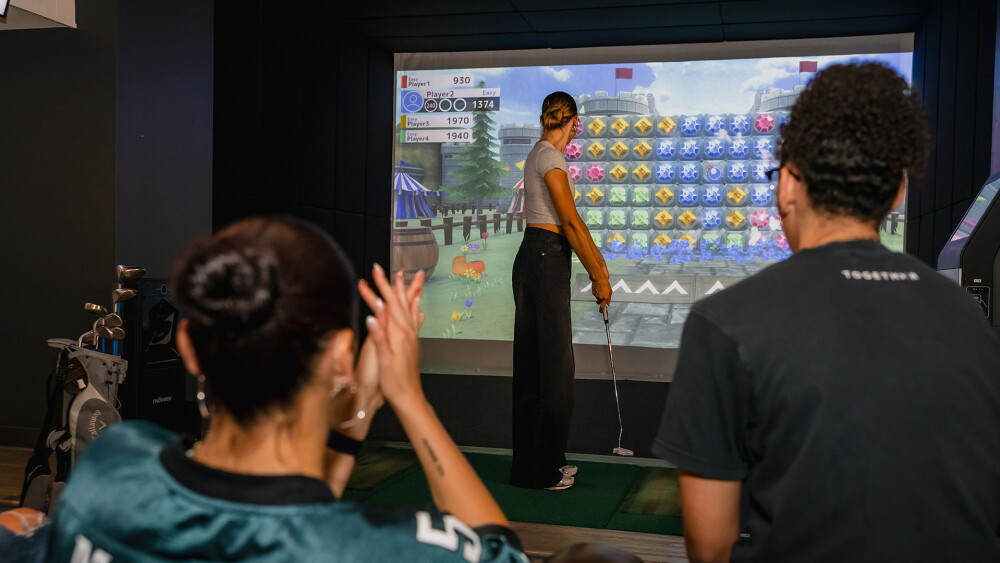
Technology should make league nights easier, not create more work. Before investing, confirm that the space, installation, connectivity, and support plan can deliver a consistent experience. A simulator depends on dependable infrastructure: connection issues, unclear sign-in steps, or a slow start can frustrate players and staff alike. Delarman helps golf and hospitality businesses plan reliable connectivity and technology that supports member experiences. Learn more about our golf clubs and hospitality services.
Connect simulator play with hospitality
League participants are already gathering at the club. Make it easy for them to stay, eat, and enjoy the evening.
Offer a simple food-and-beverage menu or a preselected league-night bundle.
Give teams an easy way to order without interrupting play.
Schedule occasional coaching, club-fitting, or junior nights.
Invite members to bring a guest for selected events.
Use a season finale to celebrate players and introduce the next club program.
Coordinate golf operations, food and beverage, and membership teams before launch. Assign one person to own scoring and communications, and make sure the service team knows league dates and expected attendance. Clear roles help protect the experience while reducing last-minute pressure on staff.
Measure results and improve the next season
Set a few simple measures before the first match. Review them after the season to understand both the financial return and the member response.
Track:
League fill rate: How many available places were taken?
Bay utilization: Were the reserved blocks used consistently?
Revenue per league night: What did registration and related sales generate?
F&B participation: How many players ordered, and what did they spend?
Repeat engagement: Did participants return for other club activities?
Member feedback: What should the club keep, change, or add?
For a basic forecast, estimate the number of players, registration price, number of weeks, staffing, prizes, software, and food costs. Then model optional spending separately rather than assuming every player will purchase a meal or extra session. This gives managers a more honest way to assess golf course tech ROI and understand where the program can improve.
For example, a 40-player league priced at $180 per player would bring in $7,200 in registration revenue before expenses. That is a planning illustration, not a promise of profit. The club’s actual results depend on its pricing, facility costs, participation, and what the package includes. Use your own costs and booking capacity to judge the opportunity.
Make the off-season feel like club season
A winter simulator league is a recurring member experience powered by technology, not just a series of indoor rounds. With a welcoming format, reliable systems, and thoughtful hospitality, clubs can bring members together, support game improvement, and create new reasons to spend time at the club.
That is the promise of maximizing club profits with tech: better experiences for members and a clearer path to measurable business outcomes. Delarman provides golf hospitality technology solutions tailored to the needs of golf and hospitality businesses.
Planning a winter simulator league or upgrading your club’s technology foundation?Contact Delarman to discuss a solution built around your members, operations, and goals.
Comments