

Mobile Ordering vs. Traditional F&B: Which Is Better For Your Clubhouse in 2026?
Let's cut to the chase: if you're still debating whether your clubhouse needs mobile ordering in 2026, you're asking the wrong question. The real question is how to implement it without alienating your traditional members who still value that personal touch at the bar or counter.
The good news? You don't have to choose one or the other. But before we dive into the hybrid solution that's working for forward-thinking clubs, let's look at what the data actually tells us about member preferences and spending patterns.
The Numbers Don't Lie: Mobile Ordering Is Changing Member Behavior
Here's what's happening across hospitality venues right now, and your clubhouse is no exception:
85% of regular customers prefer mobile ordering for its convenience. That's not a trend: that's the new standard. More importantly, members who use mobile ordering visit 6% more frequently and spend approximately 20% more per visit compared to traditional ordering methods.
Let's break that down: if your average member spends $50 per visit and comes in twice a week, adding mobile ordering could translate to an extra $520 per member annually. Multiply that across your membership, and you're looking at significant revenue growth without adding headcount or operational complexity.
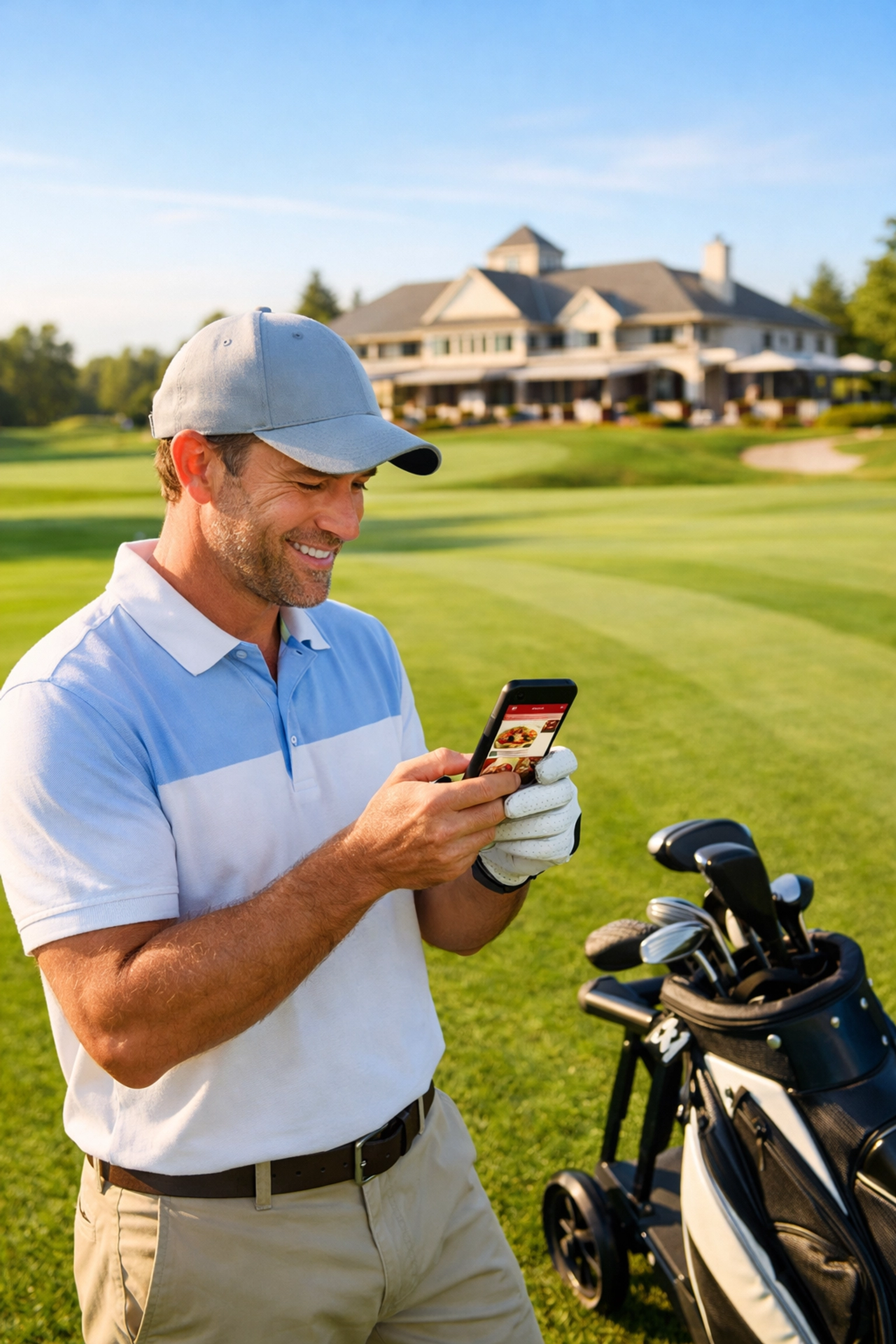
Mobile apps and websites now represent 62% of all digital orders, with members showing a strong preference for branded club apps over third-party platforms. Why? Because they want the experience to feel like it's part of their club, not a generic food delivery service.
What Mobile Ordering Actually Solves (Beyond Convenience)
When club managers hear "mobile ordering," they often think it's just about letting members order a beer from the cart path. But the operational benefits go much deeper:
Reduce wait times and bottlenecks. Your 19th hole bar doesn't need three staff members during peak Saturday afternoon hours if members can order from their phones while finishing the 18th green. Your team can focus on preparation and delivery rather than taking orders during the rush.
Eliminate order errors. Members input their own orders directly, which means no more miscommunications between server and kitchen. No more "I said no onions" conversations. This alone improves member satisfaction and reduces food waste.
Capture valuable data. Mobile ordering gives you insights into member preferences, peak ordering times, and popular menu items. You can personalize offerings, optimize inventory, and run targeted promotions based on actual behavior patterns.
Enable faster service with better satisfaction. Voice AI systems and mobile pickup locations have pushed customer satisfaction scores higher, with friendliness ratings at pickup reaching 88% compared to 74% for traditional ordering. Your staff can focus on hospitality instead of transaction processing.
When Traditional Ordering Still Matters (And Always Will)
Here's where some clubs make a critical mistake: they go all-in on mobile ordering and forget that hospitality is ultimately about relationships, not just transactions.
For clubhouses with long-standing members who value personal interaction, maintaining phone-based and in-person ordering preserves that essential human connection. This is especially true if your membership skews toward demographics less comfortable with digital technology: or simply prefer the experience of chatting with your bartender about last week's tournament.
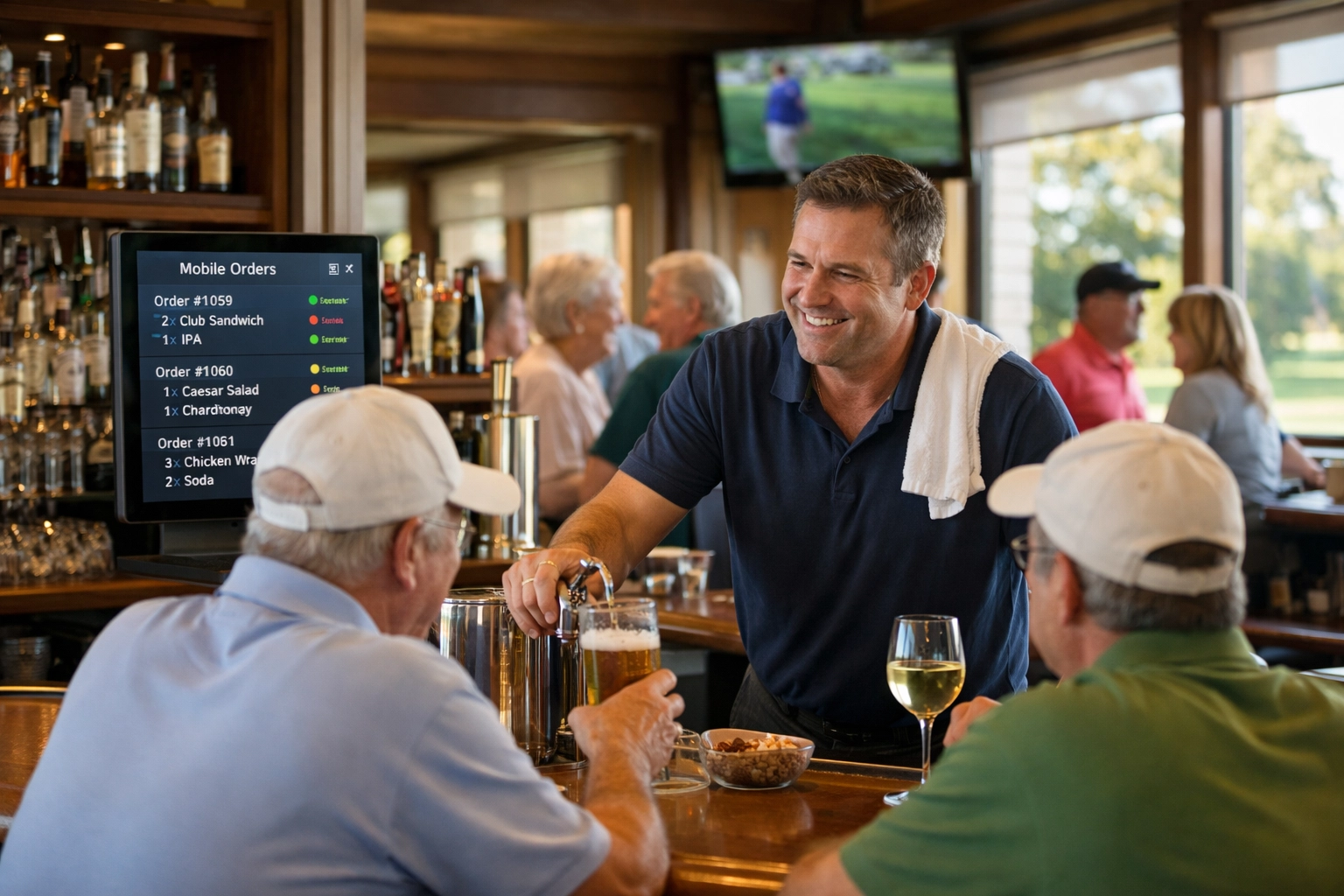
Traditional service excels in these scenarios:
Social experience matters. Some members come to the clubhouse specifically for conversation and connection. The bar or dining room counter is where relationships are built.
Complex or customized orders. When members want to discuss menu modifications or get recommendations, face-to-face interaction wins every time.
New member onboarding. First-time visitors or guests may not have the app yet and need that welcoming personal touch to feel comfortable.
Building staff-member relationships. Your bartenders and servers remembering member preferences and names creates loyalty that no app can replicate.
The risk of abandoning traditional service entirely? You lose the hospitality element that makes your club feel like a community, not a transaction platform.
The Winning Strategy: Hybrid F&B Operations
Most successful clubs in 2026 aren't choosing between mobile ordering and traditional service: they're running both systems in parallel, letting members choose their preferred experience.
Here's what that looks like in practice:
Mobile ordering for speed and convenience:
Quick orders from the course (drinks, snacks, grab-and-go items)
Pre-ordering meals for pickup at specific times
Browsing menus and placing orders during downtime
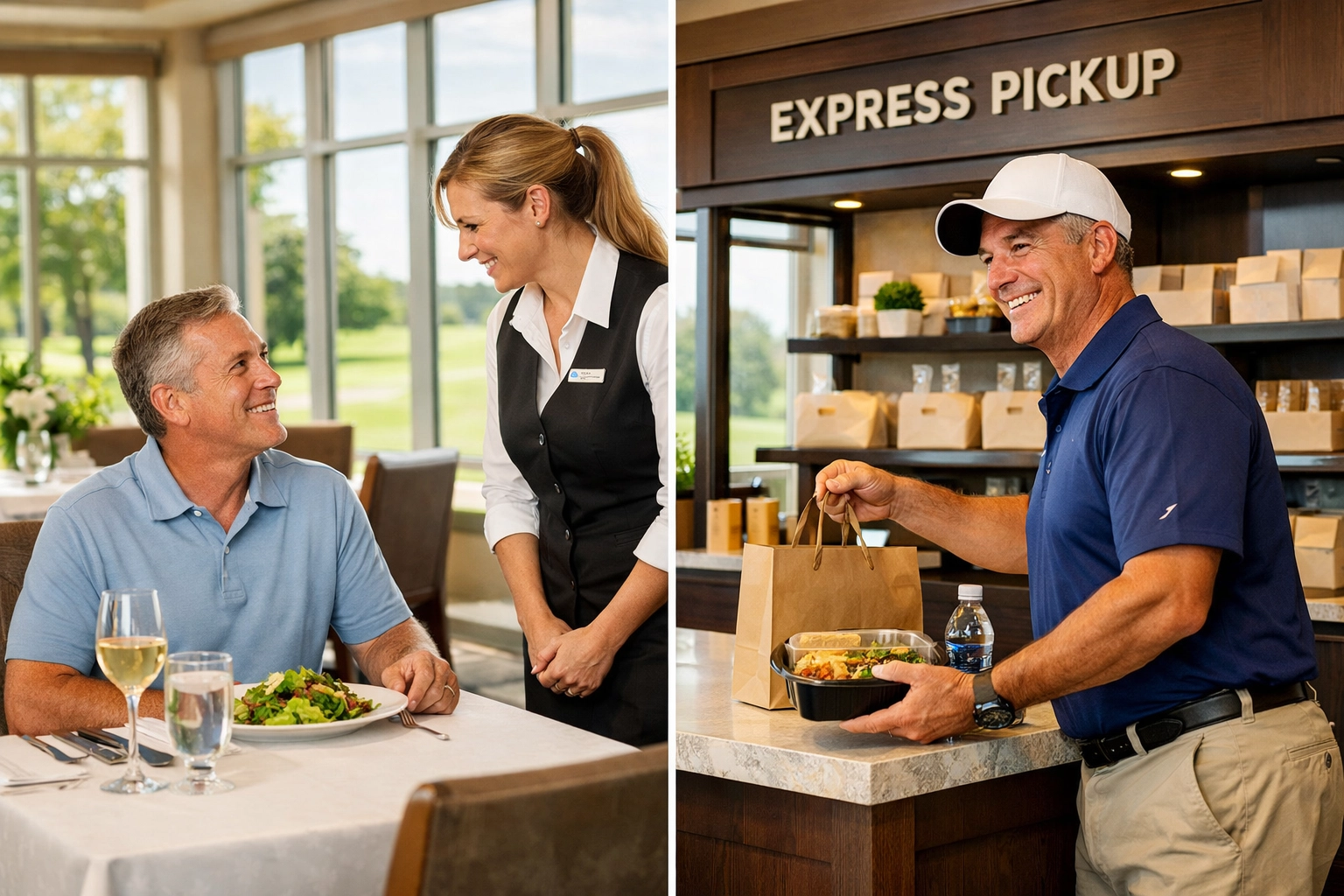
Contactless payment and express pickup stations
Traditional service for hospitality and experience:
Sit-down dining with full table service
Bar seating for social interaction
Phone orders for members who prefer calling
Counter service for walk-ins and custom requests
The key is making both options feel equally valued. Mobile ordering shouldn't be treated as "the cheap option" or "what we do for millennials." It's simply another way to serve member preferences while improving operational efficiency.
Implementation Reality Check: What Actually Works
Rolling out mobile ordering isn't just about picking an app and hoping members use it. Here's what successful clubs are doing differently:
Start with your highest-impact use case. For most clubs, that's beverage service on the course. Members understand the value immediately: no more waiting for the beverage cart or making a special trip to the clubhouse.
Make the app stupidly simple. If members need a tutorial to place their first order, you've already lost. One-tap reordering of favorites, clear pickup instructions, and minimal required fields make adoption painless.
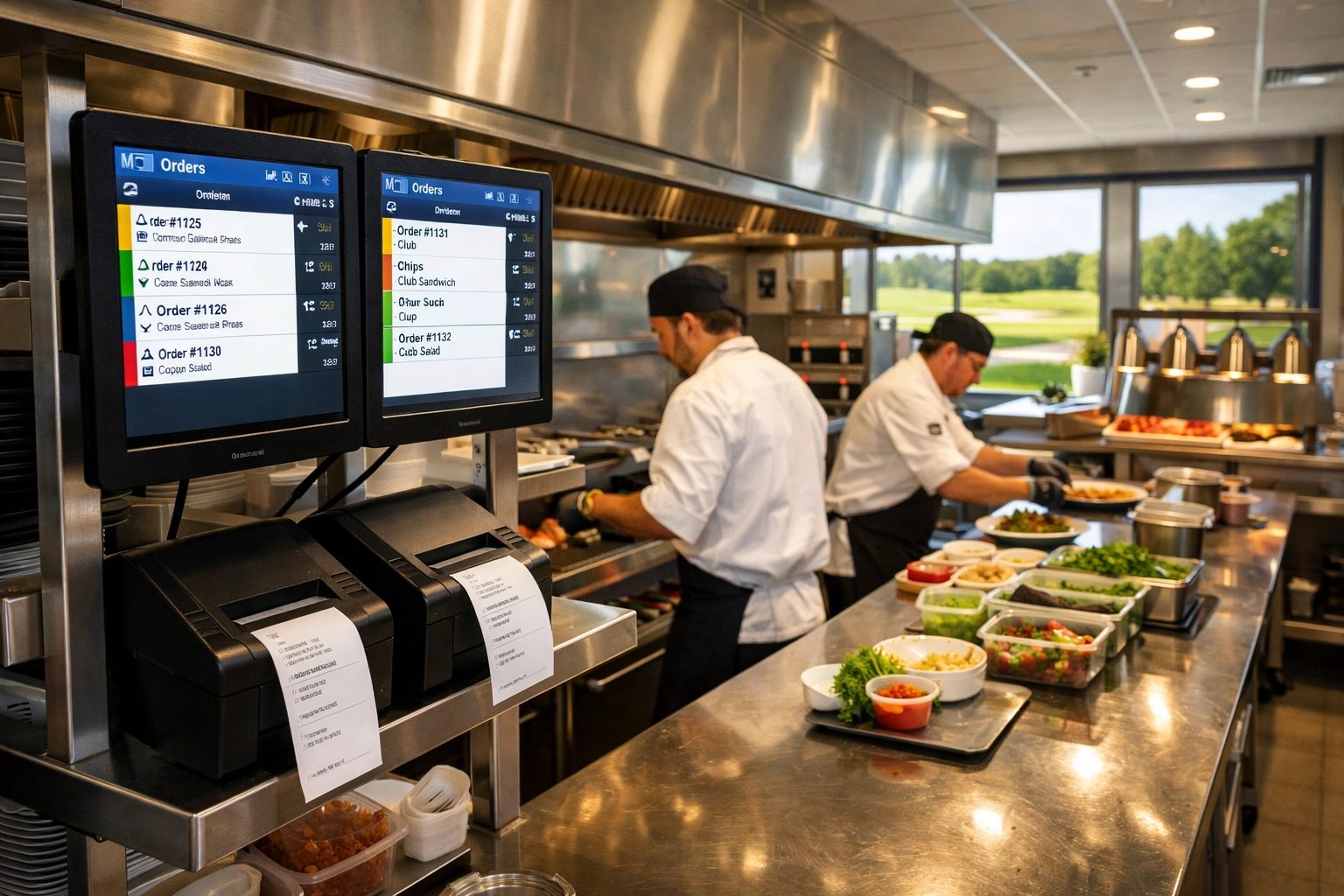
Train your staff on both systems. Your team needs to be equally comfortable with mobile order fulfillment and traditional service. That means rethinking kitchen workflows, prep stations, and pickup locations.
Communicate the benefits clearly. Don't just announce "we have an app now." Show members specific scenarios where mobile ordering saves them time or improves their experience.
Monitor and optimize constantly. Track adoption rates, order accuracy, pickup times, and member feedback. The first version won't be perfect: plan for iteration.
Where Technology Partners Make or Break Success
Here's the uncomfortable truth: most clubs underestimate the technical complexity of adding mobile ordering to existing F&B operations.
You're not just adding an app. You're integrating with:
Your POS system
Member billing and accounts
Kitchen display systems
Inventory management
Payment processing
Member database and preferences
When these systems don't talk to each other properly, you end up with double-entry, reconciliation headaches, and member frustration when orders don't appear or billing gets messy.
This is where working with a golf and hospitality-specific technology partner matters. Generic IT vendors don't understand the unique workflows of club operations: member accounts, minimum spending requirements, seasonal menu changes, and the relationship between golf operations and F&B.
Delarman brings 32 years of experience supporting golf clubs and hospitality venues with integrated technology solutions. We help clubs implement mobile ordering systems that actually connect to existing infrastructure, automate member billing, and create workflows your staff can actually use without constant tech support calls.
The Bottom Line for Your Clubhouse
Mobile ordering isn't optional anymore: it's table stakes for member expectations in 2026. But rushing into implementation without maintaining your traditional service excellence is a recipe for member complaints and operational chaos.
The clubs winning right now are:
Offering both options without forcing members into either camp
Starting small with high-impact use cases before expanding
Integrating systems properly so staff aren't fighting technology
Training teams thoroughly on hybrid operations
Measuring outcomes and adjusting based on real data
Your members are already using mobile ordering at restaurants, coffee shops, and retail stores. They expect that same convenience at their club: while still valuing the personal service that makes your clubhouse feel like home.
The question isn't whether to add mobile ordering. It's how to implement it in a way that enhances your member experience, increases revenue, and makes your operations more efficient: without losing the hospitality that defines your club.
If you're ready to explore what a hybrid F&B solution looks like for your specific clubhouse operations, reach out to our team. We'll map out your quick wins, integration requirements, and implementation timeline: with zero fluff and a practical plan tailored to your club's needs.
Comments